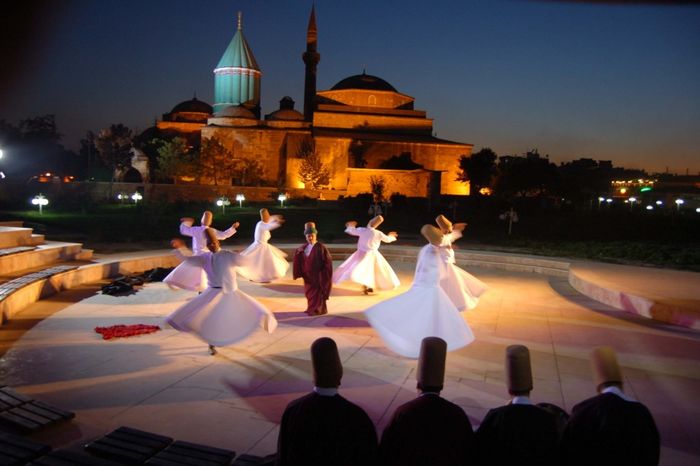
During our stay in Buda, we had the opportunity to visit a Turkish convent. The prior, or superior, whose name was Julfapa, meaning “Father of the Rose,” welcomed us warmly. Along with some of his brethren, he led us into a small chapel-like room. There, we were offered melons and other fruit, and treated with great hospitality. At our departure, we gave them a few pieces of silver, which they accepted kindly.
Julfapa wore a girdle or belt decorated with a whitish stone larger than the palm of my hand. This stone was called a Gala Bites or Milk Stone, which the monks highly valued. They believed, according to local tradition, that the Prophet Muhammad had turned an entire river in Arabia into this type of stone Turkey Private Guide.
Lodging with a Local Host
We stayed in an old Rascian house, where we were well accommodated. From our lodgings, we enjoyed a fine view over the Danube, the long bridge connecting Buda to Pest, and much of the surrounding country. During our stay, various local officials and chaufers visited us, and we entertained them according to local custom.
The master of the house seemed to maintain secret correspondence with a Franciscan friary in Rest and occasionally passed information to the ministers of state in Gomora, Raab, and Vienna. He asked me to write a letter in Latin and Italian, which I did gladly. The letter contained nothing secret, only reports about prisoners and the activities of Armenian merchants affecting trade in the region.
Encounters in the City
While riding through the city, some common citizens murmured because we rode while they walked. However, I was pleased to see many of the townspeople, known as parks, salute Signor Gabriel, the Emperor’s courier, by taking his hand and touching it to their foreheads.
Even more delightful was our visit to Mertizm Effendi, a notable figure who had once served as an extraordinary envoy in Vienna. He received us in a large and beautiful room, treating us with great courtesy. He explained that he invited us not for a feast, but for friendship and respect, emphasizing the importance of conversation and mutual respect The City of Ojfen and Its Origins.
During our visit, he provided a stool for me to sit on, as it was uncomfortable for me to sit cross-legged. He asked whether I wished to learn Turkish, whether I enjoyed Buda, and about other personal matters. Among his questions, he asked the name of the King of Poland. When I replied, “Michael Wisniewski,” he smiled and said: “Michael? That is a good name, the name of the greatest saint in heaven, after Mary.” After this friendly and respectful entertainment, he dismissed us with warm wishes.